
 Sansar News



With COVID-19, there is possible massive consequences to health, livelihoods and food chain. Agriculture supply is in big threat, mainly How long the lockdown to limit virus transmission will be taken? What will be the situation of agriculture for next year? How the food deficient of the country and will be addressed ? For the precarious of livelihoods of many nepalese populations mainly focusing agriculture, food security, and safety net policy and program responses are urgently required.
Nepal taken early action to limit the spread of COVID-19, ordering a nationwide lockdown for its population of 30 Million people is highly appreciated. However, as COVID-19 cases are increasing fast, there is great concern of open boarder to India, about the disease’s potential spread and impact. So far the 14 cases are identified and Nepal has to be ready for a possible surge. Testing should be expanded significantly.
These points of measures may help in limiting the health crisis, but—as in other countries—the complete shutdown of all economic activities except essential services will create an economic crisis and misery for the poor, with massive job losses and rising food insecurity. The economic shock will likely be much more severe for Nepal, for two reasons. First, pre-COVID-19, the economy was already slowing down, compounding existing problems of unemployment, low incomes and low capital investment of government projects, and due to the unlikely expense of current capital (salaries, petrol, vehicles, rent etc).
Here is worthy to mention the recent, WASHINGTON, April 12, 2020 the World Bank Report, the latest South Asia Economic Focus anticipates a sharp economic slump in each of the region’s eight countries, including the Nepal caused by halting economic activity, collapsing trade, and greater stress in the financial and banking sectors. The report, mentioned about the fast-changing and uncertain context, and further presents a range forecast, estimating that regional growth will fall to a range between 1.8 and 2.8 percent in 2020, down from 6.3 percent projected six months ago. That would be the region’s worst performance in the last 40 years, with temporary contractions in all South Asian countries. In case of prolonged and broad national lockdowns, the report warns of a worst-case scenario in which the entire region would experience a negative growth rate this year. This deteriorated forecast will linger in 2021, with growth projected to hover between 3.1 and 4.0 percent, down from the previous 6.7 percent estimate.
It is further in Report, in Nepal the growth is expected to fall to a range between 1.5 and 2.8 percent in FY20 reflecting lower remittances, trade and tourism, and broader disruptions caused by the COVID-19 outbreak. A prolonged outbreak of COVID-19 would impact growth significantly with a further deceleration or contraction in services and industrial production. Economic growth during FY21 is also likely to remain subdued due to the lingering effects of the pandemic with some recovery expected in FY22.
Second, Nepal’s informal sector is particularly vulnerable. Lacking regular salaries or incomes, these agriculture, migrant, and other informal workers would be hardest-hit during the lockdown period. Here, I focus on the likely impacts on agriculture, supply chains, food and nutrition security and livelihoods.
Agriculture and Supply chains
COVID-19 is disrupting some activities in agriculture and supply chains. Preliminary it shows that the non-availability of labor is interrupting all activities, particularly in dairy, crops (rice and maize), livestock and chicken and pig farming. There are disruptions in supply chains mainly transportation and other issues which is in all types of farms mainly poultry, offseason vegetables, fruits, livestock, and dairy farms. Media reports show that the closure of hotels, restaurants, sweet shops, and tea shops during the lockdown is already depressing milk sales. Here are few measures which are required to keep the agricultural sector and supply chains working smoothly:
- The government should correctly issued lockdown guidelines that exempt farm operations and supply chains. But problems leading to labor shortages, feed, supply of product and falling prices should be addressed.
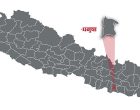
- Keeping supply chains functioning well is crucial to food security. It should be noted that like Pradesh Karnali and remote part of the country due to COVID 19, food supply may disruptions—this time and next coming months.
- Farm populations should be encouraged for continue farming but essential condition be protected from the coronavirus to the extent possible by testing and practicing social distancing.
- Small poultry and dairy farmers need more targeted help, as their pandemic-related input supply and market-access problems are urgent Farmers and for their product must have continued access to markets. This can be a mix of private markets, cooperatives, and community based initiatives which should be within guidelines of local government. For this aggressive packages should be designed and urgently made in place by Federal Government to guide Provincial and Palikas.
- As lockdown measures have increased, demand has risen for home delivery within urban set up /cities of groceries and E-commerce. This trend should be encouraged and promoted in urban set up.
- Local Palikas should encourage Ward Team for the farming in individual household level, groups , with cooperatives creating the attractive motivation packages. In this time, Palikas can promote the PPP models in l agriculture sector by encouraging the individual capitals to establish the agriculture farms. It can be opportunity for the self reliant Economy of the Nation.
Social safety nets and Economic shock
The lockdown has choked off almost all economic activity. In urban areas, leading to the widespread loss of jobs and incomes for workers and the poor. The shutdown will cause untold misery for informal workers and the poor, who lead precarious lives facing hunger and malnutrition. The best way to address this urgent need is to use social safety nets extensively to stabilize their lives with food and cash.
The Nepal government should quickly respond the crisis and announcement of heavy relief package, which includes food and cash transfers. Several Paliks and state governments have announced their own support packages but not enough and not similarity. However, it is inadequate compared to the enormous scale of the problem.
Ms. Nobel Prize economists Esther Duflo and Abhijit Banerji say “ that the government should have been much bolder with the package’s social transfer schemes where the $22 billion in spending is only 0.85% of India’s GDP which is not enough. Further they have mentioned, this is much lower than the packages passed by the United States, European and some Asian countries. India should think bigger, and be spending at least 4% to 5% of GDP. The central and state governments must spend more, even if there is one-time hike in the fiscal deficit.” Such argument for India is also equally important and learning to us for Nepal, which we should also think in bigger scale.
Conclusion
Additional measures needed is Food and Nutrition Security. Government warehouses, collection centers should be established for to offer coverage of distribution and Nutrition programs. Efficient supply of nutrition for health professionals, patients in hospital, children and women are much more important in this severe time. Front line workers mainly health professionals, security personnel, and media will be crucial for few more months. Provincial governments and Local government: Palikas should initiate urgently innovative programs to promote food and nutrition security keeping in mind COVID -19 exist is uncertainty.
COVID-19 is an unprecedented challenge for global and is for us Nepal as well. Nepal’s large population and the economy’s dependence on migrant revenue, from subsidence agriculture and others which may lockdowns and other social distancing measures hugely disruptive. The Federal, Provincial and Palikas have already recognized the challenge and responded aggressively mainly in relief packages for a week—but this response is just the beginning. We must be prepared to scale it up, easing the economic impacts through even greater public program support and policies that keep markets functioning.
(Dr Devkota is Academician NAST, former Vice Chair NPC )
वि.सं.२०७७ वैशाख ७ आइतवार १५:२० मा प्रकाशित