


 Sansar News



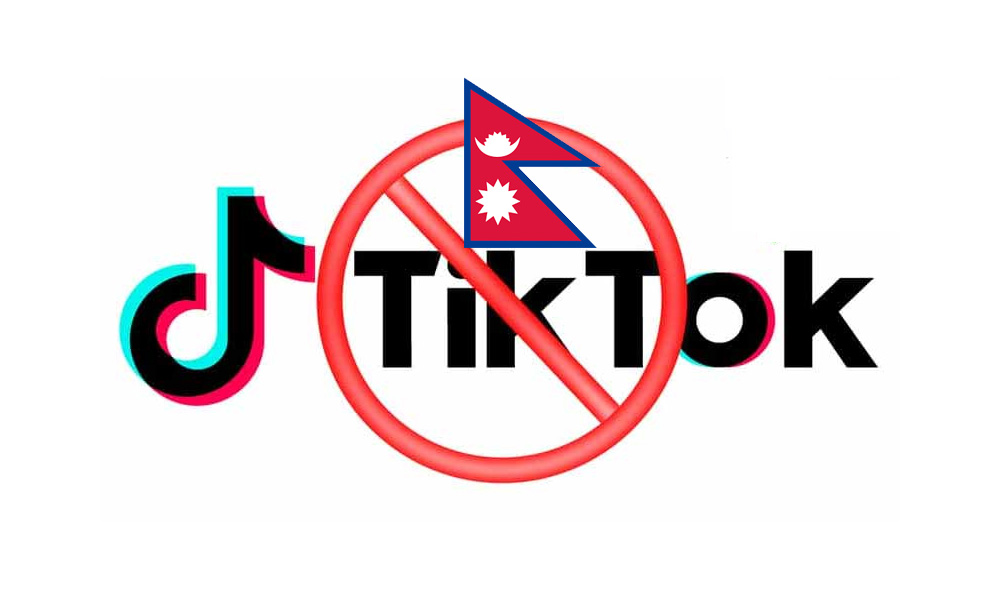
Web traffic has developed pointedly not long after the public authority prohibited the famous virtual entertainment stage TikTok, recommending that clients investigate the web escape clauses to get to the application.
Web access suppliers and specialists say TikTok represents almost 40% of web transmission capacity utilization in Nepal, and when it is restricted, web utilization ought to have plunged.
Be that as it may, to the shock of many, web traffic has developed by 20% after the boycott, as per information given to the Post by web access suppliers.
Most TikTok clients have introduced virtual confidential organization (VPN) applications that permit them to sidestep neighborhood restrictions, following the public authority’s unexpected boycott last Monday.
The VPN changes the client’s area and district for TikTok and permits them to interface with their preferred nation and server and, furthermore, give another IP address.
The telecom controller guaranteed that 95% of the TikTok activities had been hindered until Saturday.
However, clients appear to be a stride in front of the controller.
“Web traffic has expanded by 20% after the TikTok boycott, which might be because of the establishment of VPN applications,” said Sudhir Parajuli, leader of the Web access Suppliers’ Relationship of Nepal.
There are around 2.2 million TikTok clients in Nepal, he said.
As indicated by Nepal Web Trade, Nepal’s just Web trade point laid out to keep neighborhood traffic nearby and further develop neighborhood web surfing with neighborhood content while saving global data transfer capacity, web traffic has not dropped regardless of the boycott of the data transfer capacity eating online entertainment stage.
A Bureau meeting last Monday chose to boycott the web-based entertainment application, saying its substance has been upsetting the country’s social congruity. The choice, be that as it may, has been tested in the High Court, which will start the consultation from Monday.
“The two media communications specialist co-ops — Nepal Telecom and Ncell — and in excess of 30 network access suppliers have proactively obstructed TikTok,” said Bijaya Kumar Roy, overseer of the Observing Division at Nepal Broadcast communications Authority.
Web access suppliers like Vianet, Subisu, Exemplary Tech, and TechMinds among others, which have a colossal number of clients, have likewise hindered TikTok in accordance with the public authority guidance.
Last Monday, hours after the public authority chose to boycott the Chinese application, TikTok composed an email to the Nepal Telecom Authority, the telecom controller, communicating its anxiety about the boycott.
Answering the email, the power said it needed to carry out the public authority’s choice. “We have mentioned TikTok to collaborate in carrying out the public authority choice,” said Roy.
The authority has likewise shaped a board under Roy for viable execution of the TikTok boycott.
“We will look at the status to find which specialist organizations have hindered the substance from their organization and which have not,” said Roy.
As per Parajuli, they obstructed the substance when the power guided them to do as such.
Ncell said that it hindered TikTok from the site and application in no less than 24 hours following the power’s order.
“Forbidding an application is a continuous cycle. It is preposterous to totally boycott it in a little while,” Parajuli said.
Except if the assistance giving organization doesn’t hinder the site, individuals will attempt to utilize it through other accessible administrations, Parajuli said.
“Likewise, individuals have begun utilizing the web-based entertainment stage by changing the space name framework (DNS) on Google. We are attempting to impede this as well,” Parajuli said. “We are additionally investigating the rising traffic in the VPN and will attempt to impede that also.”
Changing the DNS permits clients to get to content that is impeded in a specific country.
Specialists, in any case, say not all VPNs are protected.
“There are open or obscure VPNs and approved VPNs. Utilizing open VPNs expands the gamble of safety breaks,” said Vivek Rana, an online protection master. “On the off chance that the open VPN infuses malevolent code in the PC or portable it will make issues,” he said.
Utilizing an approved VPN limits the gamble of spillage of client information, Rana said.
Regularly, free VPNs are undependable to utilize, he said.
“At the point when a nation boycotts certain applications, the organizations advance free VPNs. The plan is generally to gather clients’ information,” Rana said.
He said that prohibiting the technology is troublesome. “Individuals look for choices to utilize that help. So a total boycott is counterproductive,” Rana said. “The main thing the public authority can do is to ‘RegTech’ which means bringing Administrative Innovation,” he said.
RegTech is the utilization of data innovation to upgrade administrative and consistence processes.
Rana expressed that as Nepal is very feeble in directing innovation, there is an absence of oversight, especially in the monetary area.
Roy expressed that to carry out the public authority choice the power will ensure that TikTok is totally prohibited even by turning off different choices.
“We might need to impede VPNs on the off chance that individuals are utilizing them to get to TikTok as free VPNs compromise information security,” Roy said. It is feasible to obstruct free and dangerous VPNs, he said. Yet, impeding paid or approved VPNs is pointless, he said.
Insiders said that the prohibition on TikTok implies a misfortune in income for the public authority as TikTok consumes 40% of transfer speed in Nepal.
Santosh Sigdel, pioneer administrator of Computerized Privileges Nepal, a support gathering to reinforce city space and advanced freedoms, said restricting TikTok is against the opportunity of articulation.
“The main piece of computerized freedoms is admittance to stages. Getting to TikTok was significant for some individuals, yet it got restricted,” he said. “The boycott was surprising and it disregarded individuals’ advanced freedoms,” said Sigdel.
वि.सं.२०८० मंसिर १४ बिहीवार १२:१४ मा प्रकाशित