

 Susan Kafle



When people think about China’s agricultural transformation, they often imagine drones flying over rice fields, robots replacing farmers and artificial intelligence managing entire farms. I had similar expectations before travelling to China this summer. As a software engineer, I was eager to see how emerging technologies were being applied in agriculture. However, after spending fifteen days visiting research institutes, digital villages, agricultural enterprises and rural communities across Beijing and Xi’an, I returned home with a very different understanding. The biggest lesson was not about technology itself it was about how an entire ecosystem works together to make innovation meaningful.
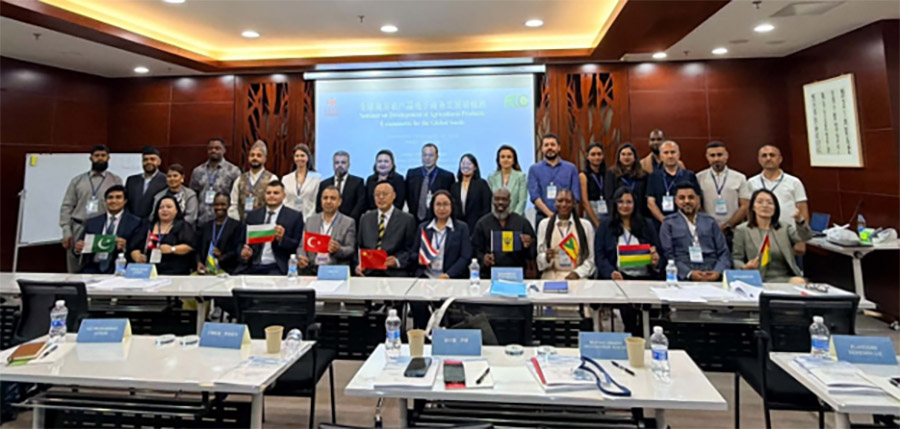
I had the privilege of representing Nepal at the Seminar on Development of Agricultural Products E-commerce for the Global South, organized by the Foreign Economic Cooperation Center (FECC) under China’s Ministry of Agriculture and Rural Affairs. Alongside delegates from eleven developing countries, I had the opportunity to learn from experts, visit innovative agricultural projects and exchange ideas with professionals from different parts of the world. Although the seminar focused on agriculture and e-commerce, it became much more than an academic program. It offered a chance to observe how long-term planning, digital innovation and public policy can work together to improve people’s lives.
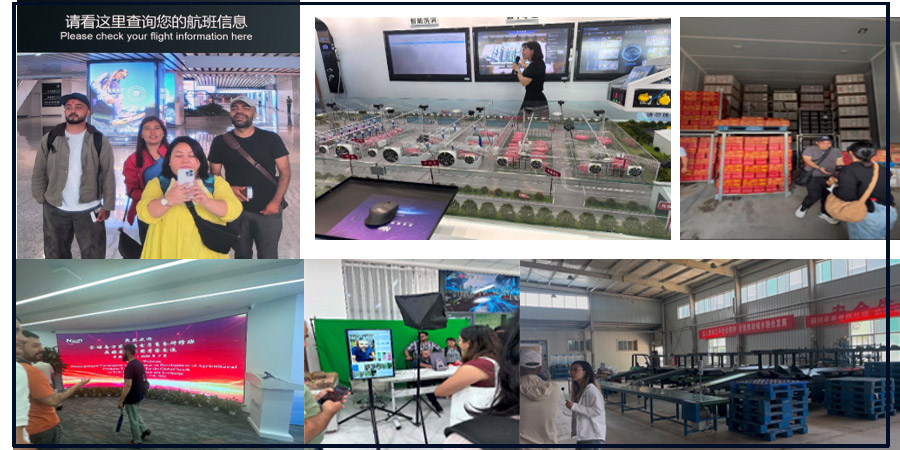
The experience began the moment I landed in Beijing. Immigration procedures, transport services and digital payment systems operated with remarkable efficiency. Technology was present everywhere, yet it never felt complicated or intrusive. Instead, it quietly simplified everyday tasks. That first impression stayed with me throughout the journey. Whether I was travelling on public transport, visiting research centers or exploring rural communities, technology consistently served a single purpose making services faster, simpler and more accessible.
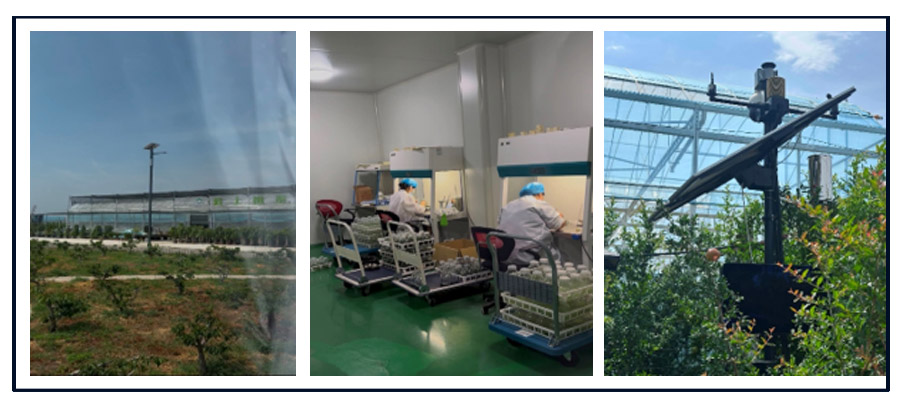
One of the most memorable visits was to Beijing Nongxin Internet Technology Group, where I witnessed artificial intelligence being used in modern livestock management. AI-powered systems continuously monitor animal health, feeding behavior and environmental conditions, while automated technologies adjusted temperature and ventilation to maintain ideal conditions. Despite these advanced technologies, the role of farmers remained central. Artificial intelligence was not replacing human decision-making; it provided accurate information that enabled farmers to make better decisions, reduce repetitive work and improve productivity. It challenged the common perception that AI exists only to replace jobs. Instead, I saw how technology can become a reliable partner that strengthens human capability.
Throughout the seminar, I gradually realized that China’s agricultural success cannot be explained by technology alone. It is built upon a carefully connected ecosystem where research institutions, universities, government agencies, businesses, logistics providers and farmers all contribute to the same objective. Every lecture reinforced the idea that agriculture extends far beyond cultivating crops. It includes transportation, branding, food safety, cold-chain logistics, digital marketplaces, consumer confidence and continuous innovation. Each component supports the others, creating a system where progress becomes sustainable rather than temporary.
As someone working in the field of software engineering, I found this concept surprisingly familiar. Successful software is never created simply by writing good code. It depends on thoughtful architecture, reliable infrastructure, continuous testing, security and collaboration among different teams. Agriculture follows the same principle. Strong harvests alone are not enough if products cannot reach consumers efficiently or if farmers struggle to access profitable markets. Real success comes from ensuring that every part of the system works together.
Another experience that left a lasting impression was visiting China’s digital villages. Farmers were no longer dependent solely on traditional markets or local middlemen. Many were using e-commerce platforms and livestreaming to sell products directly to consumers across the country. Young entrepreneurs were establishing businesses within their own communities rather than migrating to large cities in search of employment. These achievements were made possible through reliable internet connectivity, efficient logistics networks, entrepreneurship training and consistent government support. Technology was important, but it succeeded because it was supported by the right environment.
This experience naturally made me reflect on Nepal. Our country produces world-class tea, coffee, cardamom, honey, medicinal herbs and many other high-value agricultural products. Yet many farmers continue to struggle with limited market access, inadequate transportation and weak branding. We often focus on increasing production, but perhaps we should also ask how farmers can receive greater value for the products they already grow. Could stronger digital platforms, better logistics and improved branding help bridge that gap? These are questions worth exploring as Nepal continues its own journey towards agricultural modernization.
Another lesson that stood out was the importance of consumer trust. During several presentations and field visits, we saw how digital traceability systems allowed consumers to identify the origin of agricultural products through simple QR codes. Combined with modern cold-chain logistics, these systems helped preserve quality while giving consumers confidence in what they were purchasing. In today’s competitive marketplace, trust has become just as valuable as productivity. Nepal’s growing reputation for organic and high-quality agricultural products presents an opportunity to build similar confidence through better certification, branding and traceability.
While technology dominated many discussions throughout the seminar, one of my strongest memories had nothing to do with artificial intelligence or smart farming. On an unusually hot afternoon in Beijing, I stopped at a small local shop after feeling exhausted from the summer heat. The owner noticed my condition, handed me a bottle of cold water and a frozen drink, and refused to accept payment. Instead, he simply smiled and asked if we could take a photograph together. It was a simple act of kindness, but one that reminded me that no technological advancement can replace genuine human connection. Development is ultimately about improving people’s lives, and technology is only valuable when it serves that purpose.
 As my journey came to an end, I realized that I was not returning to Nepal with ready-made solutions. China and Nepal differ greatly in geography, population, economic capacity and development priorities. Replicating China’s model would neither be realistic nor appropriate. What I brought home instead were ideas, perspectives and inspiration. I saw how long-term planning, investment in research, collaboration between institutions and practical use of technology can gradually transform an entire sector. More importantly, I learned that meaningful innovation begins with understanding people’s real needs rather than simply adopting the latest technology.
 Nepal possesses enormous agricultural potential, talented young people and resilient farming communities. With stronger collaboration between government, universities, researchers, entrepreneurs and farmers, we have every opportunity to develop our own path towards agricultural transformation. We do not need to become another China. Instead, we can learn from its experiences while building solutions that reflect Nepal’s own geography, culture and priorities.
The greatest lesson I brought back from China was not about artificial intelligence, smart farming or digital commerce. It was the importance of creating an ecosystem where innovation, education, infrastructure, policy and people move together towards a common goal. Technology may provide the tools, but it is collaboration, vision and commitment that create lasting change. As Nepal looks towards the future of agriculture, perhaps the most important question is not whether we can replicate another country’s success, but whether we are ready to build a model that is uniquely our own.
वि.सं.२०८३ साउन १३ बुधवार १४:०४ मा प्रकाशित